 The Daily Ubuntu
Lithuania, 1940
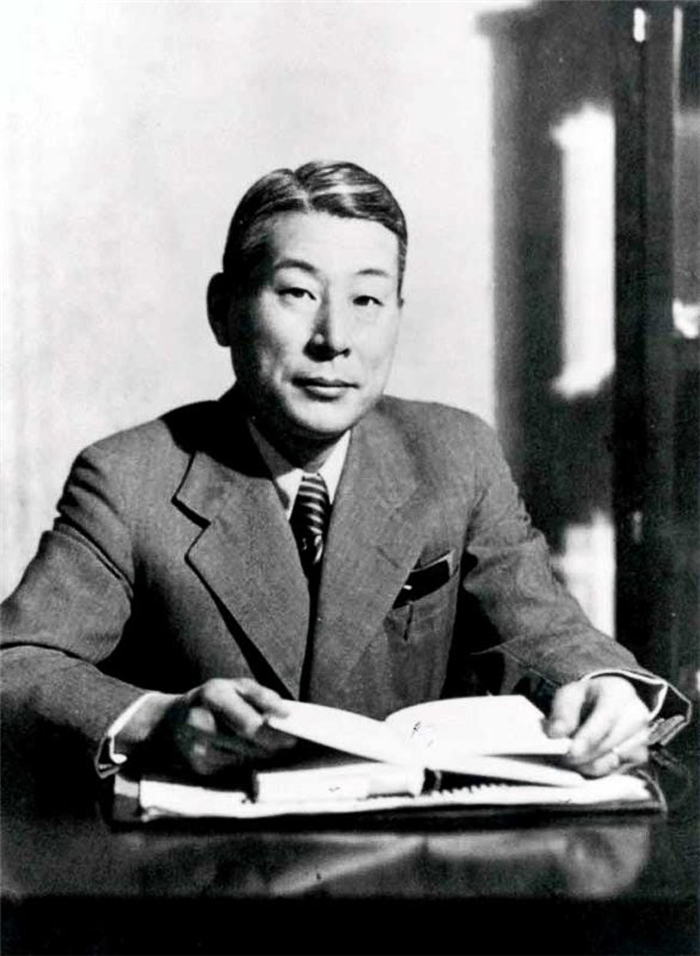
Chiune Sugihara
Japan's consul in Kaunas in 1940, Chiune Sugihara signed thousands of transit visas for Jewish refugees, despite Tokyo's refusal. Yad Vashem recognized him as Righteous Among the Nations in 1984.
Inspiring Lives · Justice and reconciliation
It was July 1940, in Kaunas, Lithuania.
Outside the Japanese consulate, a long line was waiting. Jewish refugees were fleeing the Nazis. The Soviet army had just occupied the country.
They were looking for a way out. There was one, a narrow one: the island of Curaçao, a Dutch colony that required no entry visa.
But to get there, they had to cross the Soviet Union, then Japan. They needed a Japanese transit visa.
Behind the consulate door, there was one man: Chiune Sugihara.
He was born on January 1, 1900, in Mino, in Gifu Prefecture. His father wanted him to become a doctor. The young man failed the entrance exam on purpose. In 1918, he went to study English at Waseda University.
He became a diplomat. In Harbin, he learned Russian from Russian émigrés. In 1936, he married Yukiko Kikuchi.
In November 1939, he was sent to Kaunas. He was the first Japanese diplomat in Lithuania. His mission: to watch the movements of armies.
Then the refugees came to his door.
A delegation, led by Zerach Warhaftig, asked him for visas. Sugihara wrote to Tokyo. The answer was no. He wrote again. No again.
The telegram was clear: without proper papers, "you must not grant them transit visas."
Sugihara and his wife could no longer sleep. "We could not sleep at night," Yukiko said.
He had already begun to sign.
He wrote visas by hand, eighteen to twenty hours a day. He aimed for two to three hundred a day. He asked refugees to help with the stamping. Some stamps went on upside down.
One refugee, Lucille Camhi, remembered him. He had looked at them with compassion. He had given them the visa right there on the spot.
One day, a man named Moshe Zupnik asked him the question. Sugihara answered simply:
“I do it just because I have pity on the people.”
The Soviets ordered foreign diplomats to leave. In early September 1940, Sugihara closed the consulate.
At the station, he kept writing. According to his son Hiroki, he threw visas out of the train window.
As he left, he is reported to have told the refugees: "Please forgive me. I cannot write anymore."
He had signed between 2,100 and 3,500 transit visas. According to the USHMM, about three hundred more people, mostly children, benefited from them. Thousands of people were able to escape.
Less than a year later, in June 1941, Germany invaded Lithuania. The route closed.
Sugihara was then sent to Prague, to Königsberg, then to Bucharest. In 1944, the Soviets detained him and his family for three years.
In 1947, back in Japan, he was asked to leave the ministry. The reason given was staff cuts. He and his wife saw it as punishment for his disobedience in Kaunas.
He lived on odd jobs. From 1960 to 1975, he worked for a Japanese trading company in Moscow.
On October 4, 1984, Yad Vashem recognized him as Righteous Among the Nations. Too ill to travel, he let his wife and children receive the honour.
Chiune Sugihara died on July 31, 1986, in a hospital in Kamakura.
Today, the descendants of the people he helped are estimated in the tens of thousands.
His country had told him no. His act echoes Ubuntu without being the same thing: recognizing, in a stranger at the door, someone whose fate is ours to care about.
What remains is the image of a train pulling away.
And, from its window, visas being thrown.
Sources
- Chiune-Sempo Sugihara, Visas to Japan (Yad Vashem) www.yadvashem.org
- Chiune (Sempo) Sugihara (Holocaust Encyclopedia, USHMM) encyclopedia.ushmm.org
- Chiune Sugihara (Wikipedia) en.wikipedia.org
Every figure on this page links to a verifiable public source.